
The moratorium on commercial cultivation of Bt brinjal, the genetically-modified form of the vegetable, is not likely to end anytime soon.

'Ultimately, do we want sustainable agriculture that's relevant to our climate, resources and food security? Or do we want corporate farming based on high-risk GM seeds and high chemical inputs?'

The varieties will take at least 4 to 5 years to reach farmers after they complete the usual cycle of breeder, foundation and certified seeds.
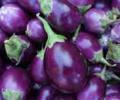
The Bacillus Thuringiensis (Bt) brinjal episode will not impede the research work being carried out in the field of food and crop biotechnology in the country, a top scientist said.
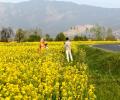
The Swadeshi Jagran Manch (SJM) on Friday opposed a regulatory body's recommendation for environmental release of genetically modified mustard, calling it "dangerous" and urged the Centre to ensure that the crop's seed is not allowed to be planted "now or ever". In a letter to Union Environment Minister Bhupender Yadav, the RSS-affiliated organisation accused the Genetic Engineering Appraisal Committee (GEAC) of functioning in an "irresponsible fashion" and said the claims made in support of genetically modified (GM) mustard were "completely untrue, unsubstantiated and wrongly projected". "Swadeshi Jagran Manch has all along been opposing this dangerous and unneeded GM mustard being brought in through the backdoor as a public sector genetically modified organism (GMO)," organisation co-convenor Ashwani Mahajan said in the letter.
The future of the GM tech in India is still uncertain.

India, which wants to double its coal output by 2020, in February raised the tax on mining coal to $6 per tonne from $1 in a bid to make it more expensive to consume the dirty fuel

'There is a great scope for enhancing the use of organic fertilisers'.
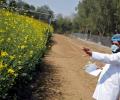
The Genetic Engineering Appraisal Committee (GEAC) has recommended the environmental release of the genetically modified (GM) mustard variety DMH (Dhara Mustard Hybrid)-11, paving the way for the commercialisation of the country's first GM food crop. The GEAC said the recommendation was valid for four years from the date the approval letter was issued. Further studies and coordinated trials will have to be conducted jointly with the Indian Council of Agriculture Research (ICAR) within two years, according to the minutes of the GEAC meeting held on October 18, which was released on Wednesday.
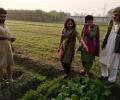
Kavitha Kuruganti has been fighting for decades to ensure farmers are respected and get their due from the Indian nation. In order to ensure they don't struggle for a living, she works to ensure sustainable farm livelihoods and farmers' rights.

Modi government is pushing GM food crops without adequate safety assessment and transparency, claim activists.

India is capable of developing GM crops, Randy Hautea, global coordinator for International Service for the Acquisition of Agri-Biotech Applications, tells Kanika Datta.
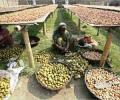
Green revolution and technology use should not be region-specific.

It is regrettable that the IB has tried to devalue the expertise available both within the concerned ministry and in the scientific community by its allegations. Governments and NGOs in many western nations have not been accused of being 'anti-national' when they put their foot down on questionable practices by cash rich agri-business companies, says Rashme Sehgal.

'With the largest number of malnourished people on the planet, India is poised to be a nation that significantly under-performs as an economy.'

The whitefly outbreak has intensified a debate over GM crops just as Prime Minister Narendra Modi's office reviews a proposal to allow farmers to grow GM mustard.

Deepak Gupta grows chemical-free food and wants farmers to go back to the practices they once knew but have forgotten, says Aditi Phadnis.

'Any new technology, either before or soon after its release, will face severe criticism by one or the other segment of society. It is only after seeing the benefits of new technology for themselves that our farmers accept it.' 'The arable land in India is not increasing and currently hovers at around 140, 145 million hectares.' 'Today, Indian agriculture has to work towards achieving nutritional security.'
